

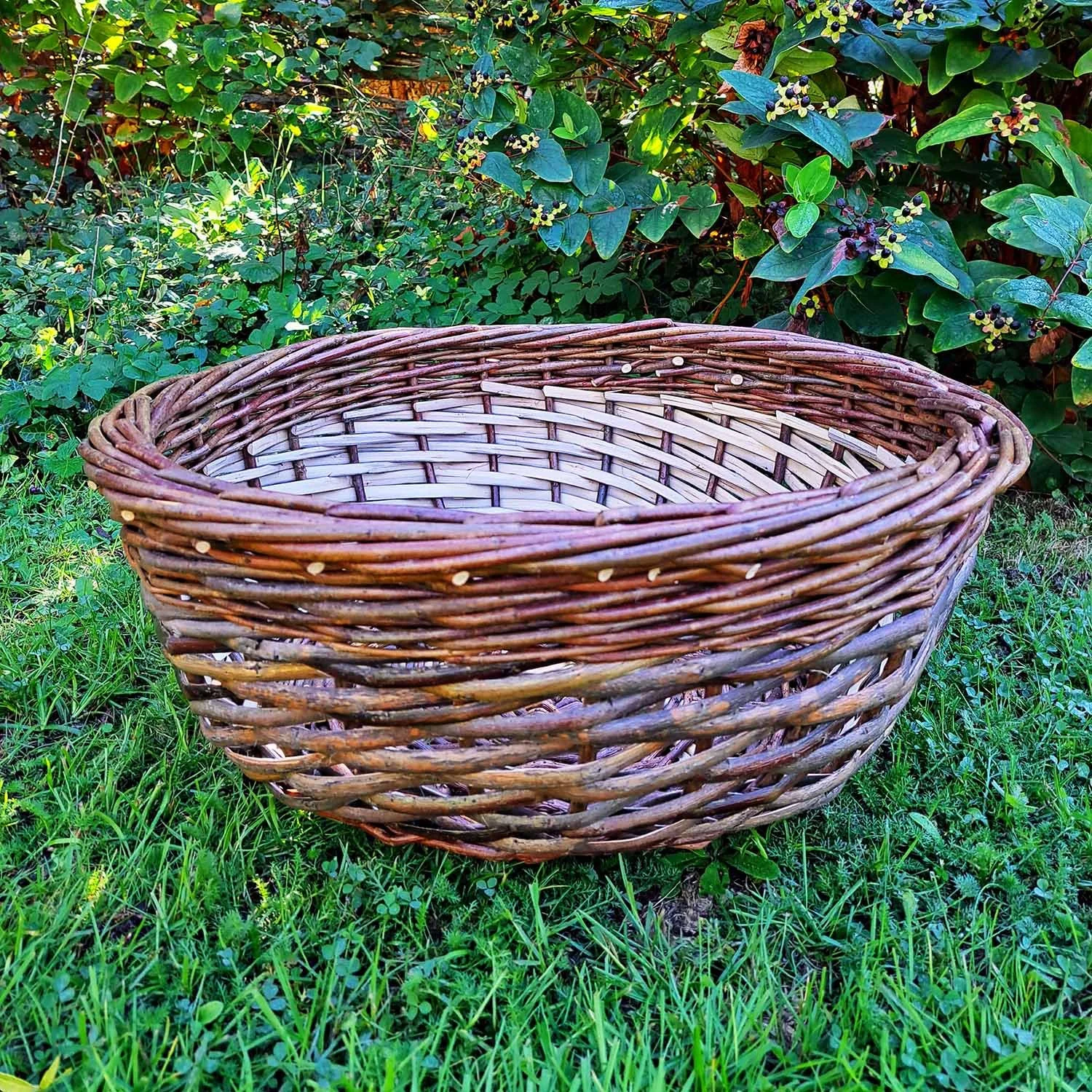
Types of basketry willow, particular thicknesses, the way rods were and are processed, and the weaving techniques used all had a purpose, particularly in the olden days. Basketry has been around for tens of thousands of years. Certain varieties of willow are finer, or thicker, or fine but woodier, and some need to be soaked longer.
Some baskets had to last under water and withstand tides; others merely had to be tough as old boots.
Skeining
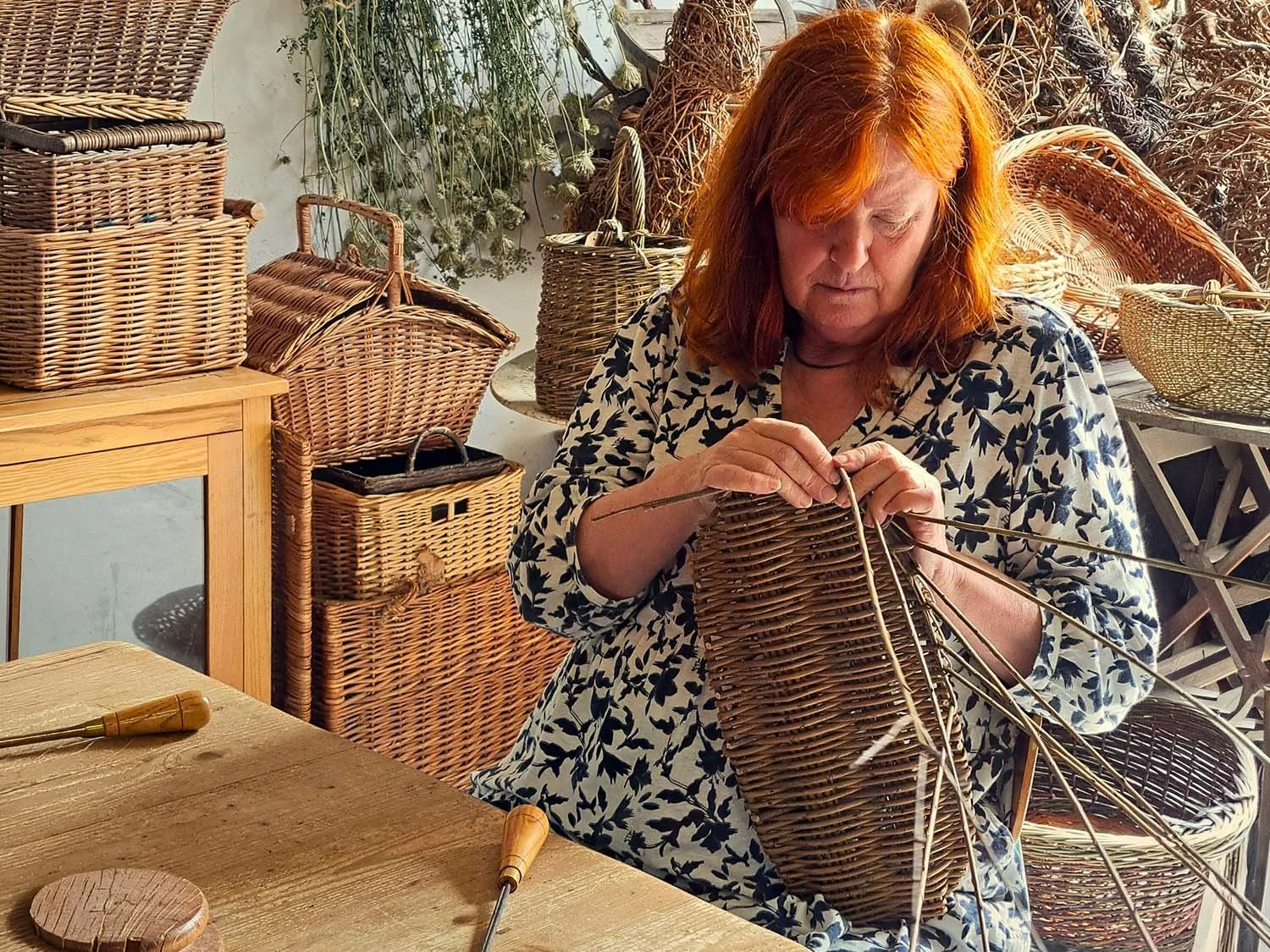
Sometimes the processing meant skeining willow with a cleave: splitting a rod into three or four splints, which are then shaved, and sometimes even pulled through upright blades for very fine work. Skeining was often done to make a basket light in weight, to make a rod last longer, or to make use of a thick rod that might otherwise have had no use.
Weaving techniques can give support to certain parts of a basket, or get the stakes (the upright rods) in the right position before the border is “dropped” (woven). A weave can be chosen for its decorative look, or for its openness, to help the basket do its job.
The herring cran
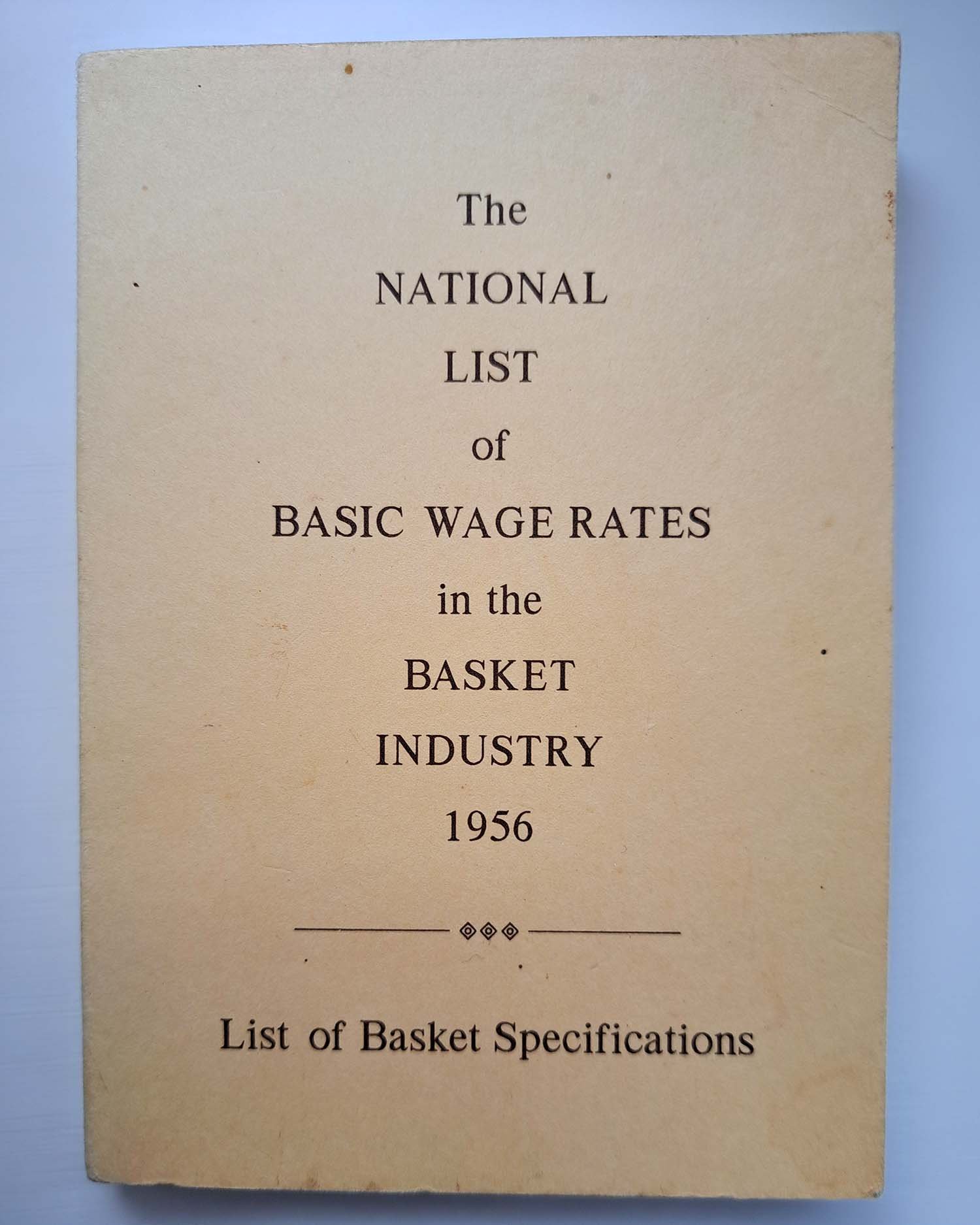
This little book, last published in 1953, lists all the baskets of Britain: how many rods were chosen for the base, the sides and the uprights, and the precise dimensions of each basket. You may have heard of the herring cran, a measure for landed, uncleaned herring. The basket had to be one of three particular sizes, so the quantity of herring could be measured and priced. Fascinating, don’t you think!
Why I keep using them
Nowadays we’re less particular about these things. We have less use for baskets: plastics took over, and in the 60s and 70s most basketmakers started to disappear as the work dried up. Now we weave baskets that are a delight to the eye and still very useful. There’s nothing so wonderful as having things in your house that you love to use, and that bring you joy just by looking at them every day. They make an interior, and can be really sculptural in the garden.
As a basketmaker, I find it of the utmost importance that old techniques are kept in use in my work, even if there’s less call for them, so they aren’t lost forever. I believe that one day we’ll have a new use for them, when we finally decide we can no longer use whatever plastic there is, and we go back to the old ways, when we could still do without, simply by being resourceful.
