

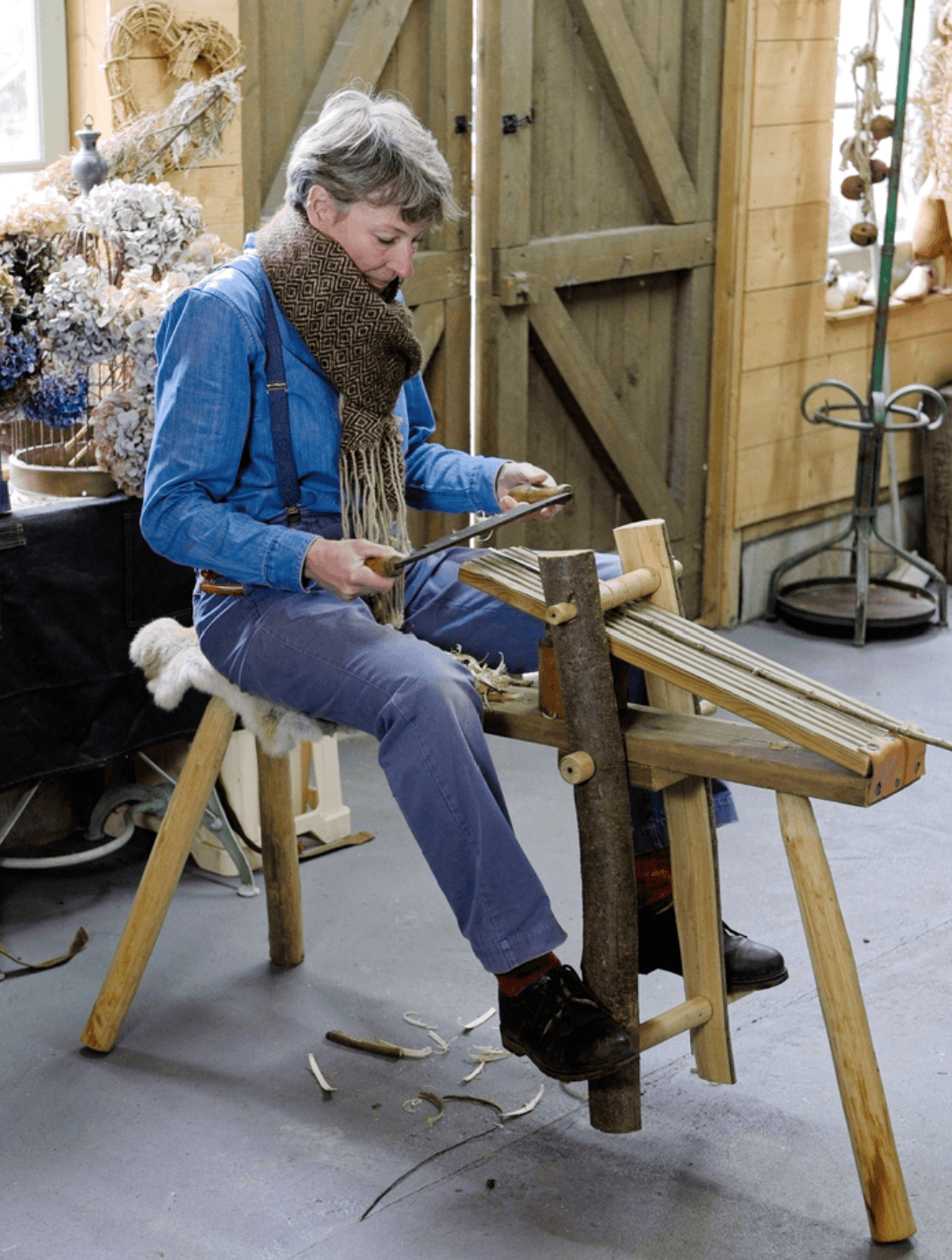
Marianne van Niekerken, Basketmaker
grower maker teacher
Est. 2006
I'm a Dutch basketmaker based in Newenden, Kent, on the Kent and East Sussex border. I weave mainly with willow I grow myself, and more and more with dogwood, hazel and sweet chestnut. My first basket was in 2006, and I've been teaching since 2018.
Marianne van Niekerken, Basketmaker
Say it: mah-ree-AN fun NEE-ker-ken
You may know me as Crafty Basketry. It’s still me, now under my own name, and my work keeps moving on: more willow varieties and more colour, finer and more intricate baskets, and workshops for people who want to build their skills. Basketry never stands still, and nor does learning.

How I Began
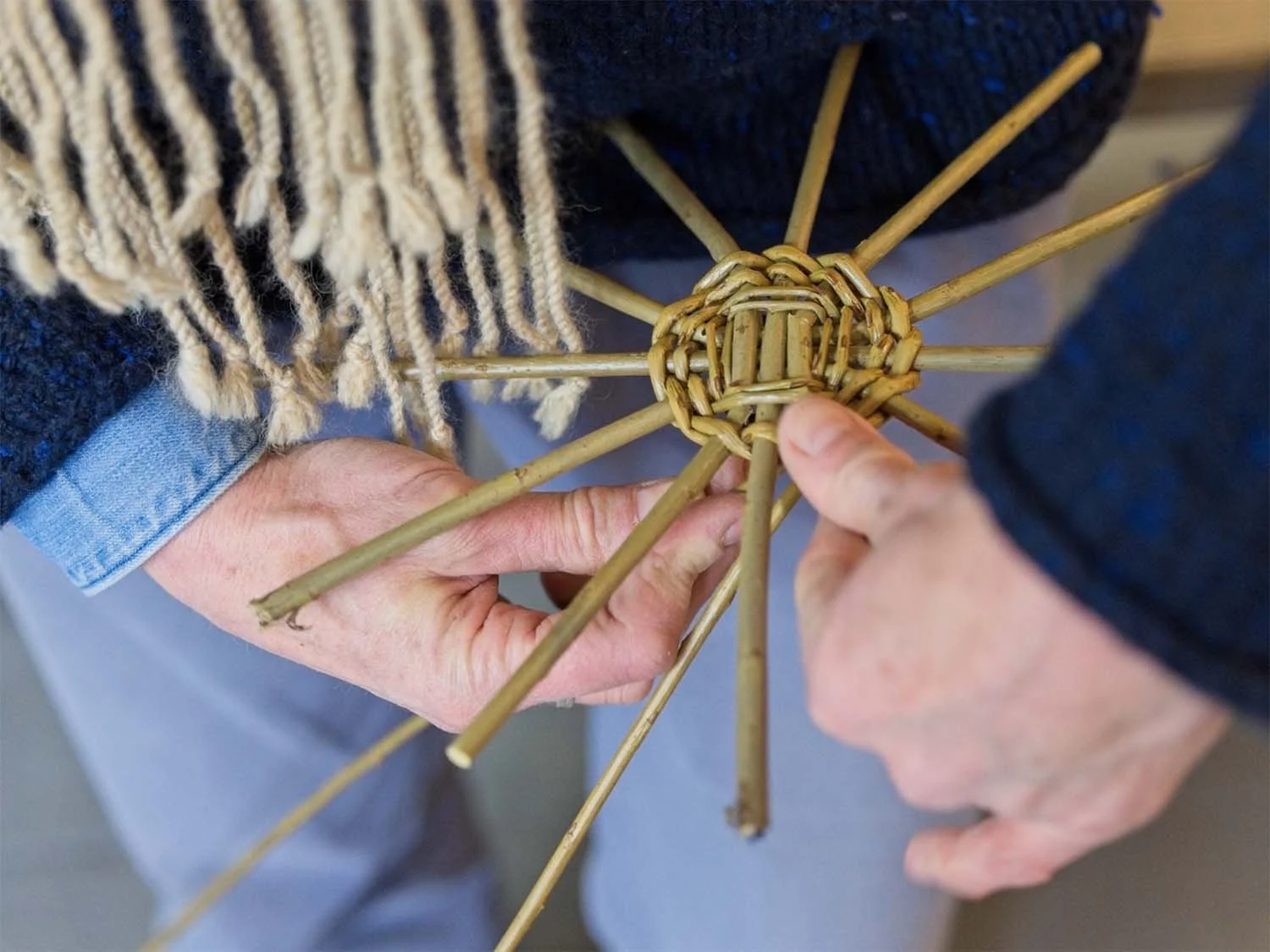
In 2006 I was working as a PA in the corporate world when I booked a two-day basketry course with Alan Sage. It took me straight back to holidays in the green east of Holland: making things and being in the woods, with the scent of damp earth, fungi and fallen leaves.
I had no experience of anything like it, but MAN, was it an eye-opener! Two days, one smallish basket with quite a few mistakes, and I was addicted. It was the first thing that lifted a stress I hadn't realised I'd been carrying. I did another course, this time with hedgerow, and that hobby became my full-time work.
Why Willow
Growing up in Holland, I saw baskets everywhere: in furniture, in storage and in everyday things, with influences from Asia and Scandinavia. Woven willow and rattan gave a home warmth and character, and people looked after what they had, so it lasted.
Sustainability, to me, is about making and using things that last, so we won’t replace things after a few years, and giving you care instructions to keep them going, just as people did in the olden days.
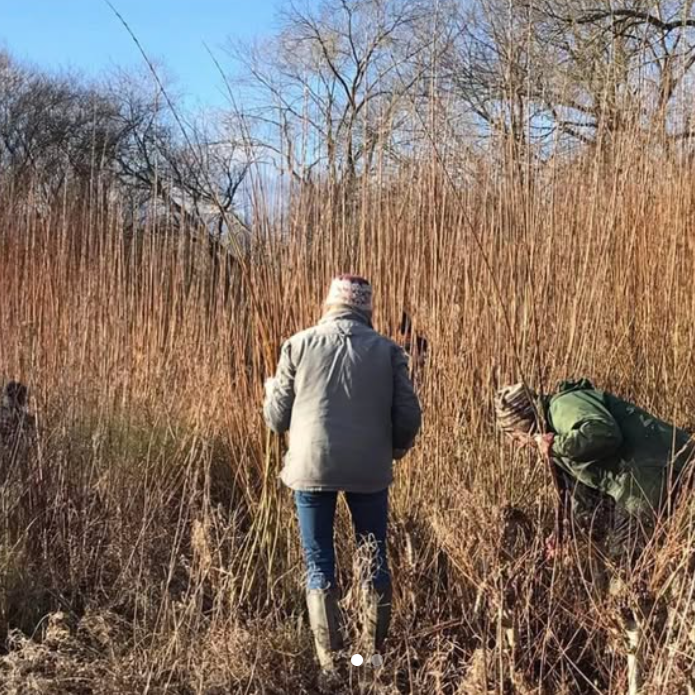
My willow grows here in Newenden, and on two other plots; in Sedlescombe and Burwash. One bed was planted 15 years ago, so will need replacing in another 5 years’ time and the latest one is four years’ old, with roots reaching 4 metres down, and of some even deeper.
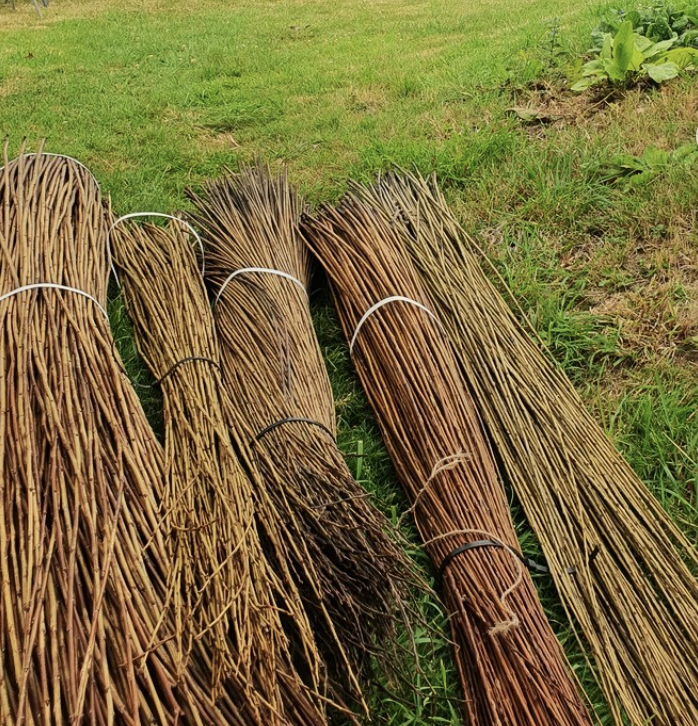
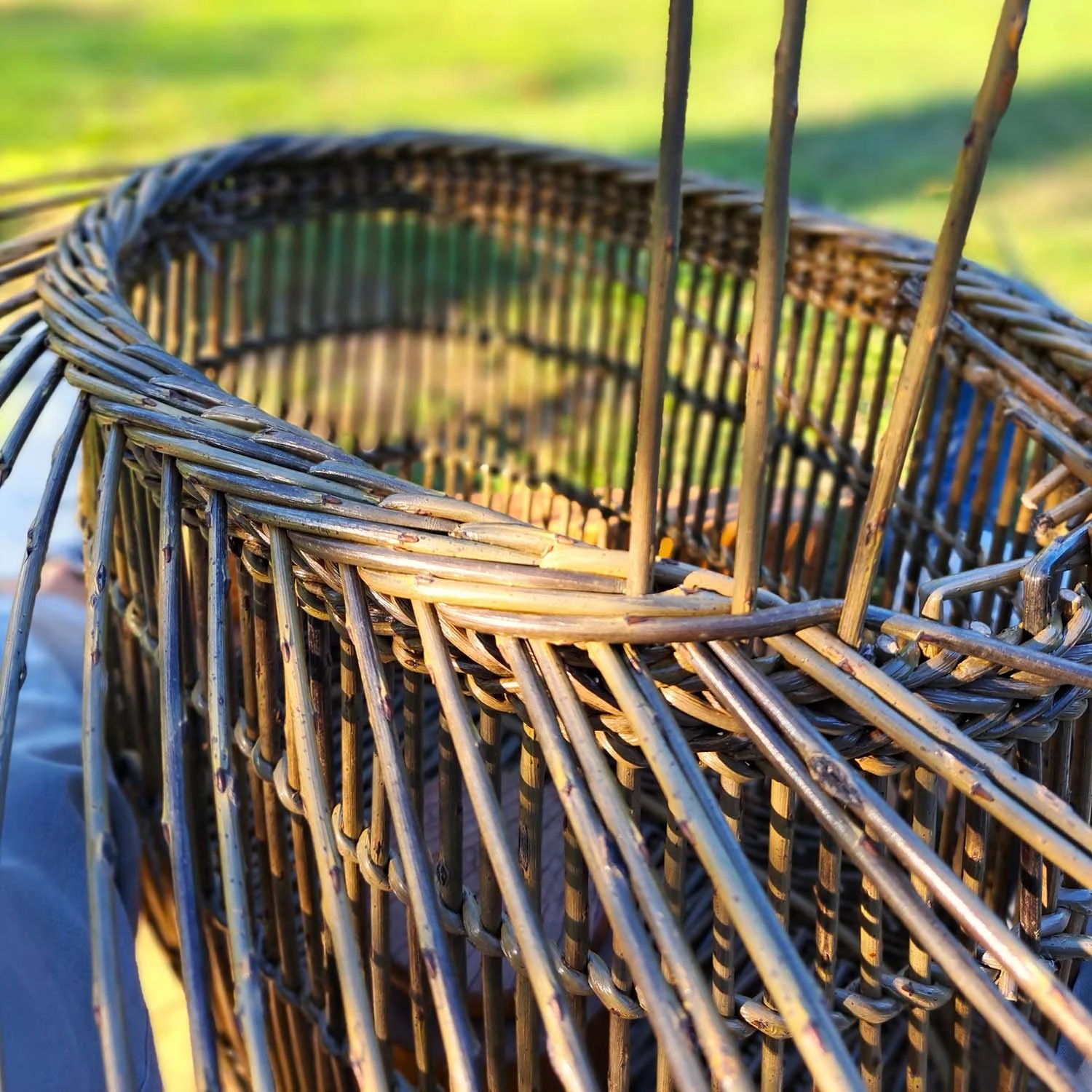
I don’t spray, so I keep each plot small, about half an acre, which keeps pests to a minimum. I cut, dry, sort and grade every rod by hand, so I know the willow long before it becomes a basket and look forward to the awkward and forked ones, as they are rare and can be used in a different way again.
While it grows, willow looks after its surroundings too. Its catkins and pollen are among the first food for bees in spring, the beds make a home for wildlife, and its roots filter the ground water and help take out toxins. Willow bark is also where aspirin first came from.
In Holland we grow willow to hang on to our dykes, as most of the country is below sea level. Back in the day, it was woven in long, wide mats that would protect the beaches against erosion and in medieval times, willow was woven into drainage.
How I Teach
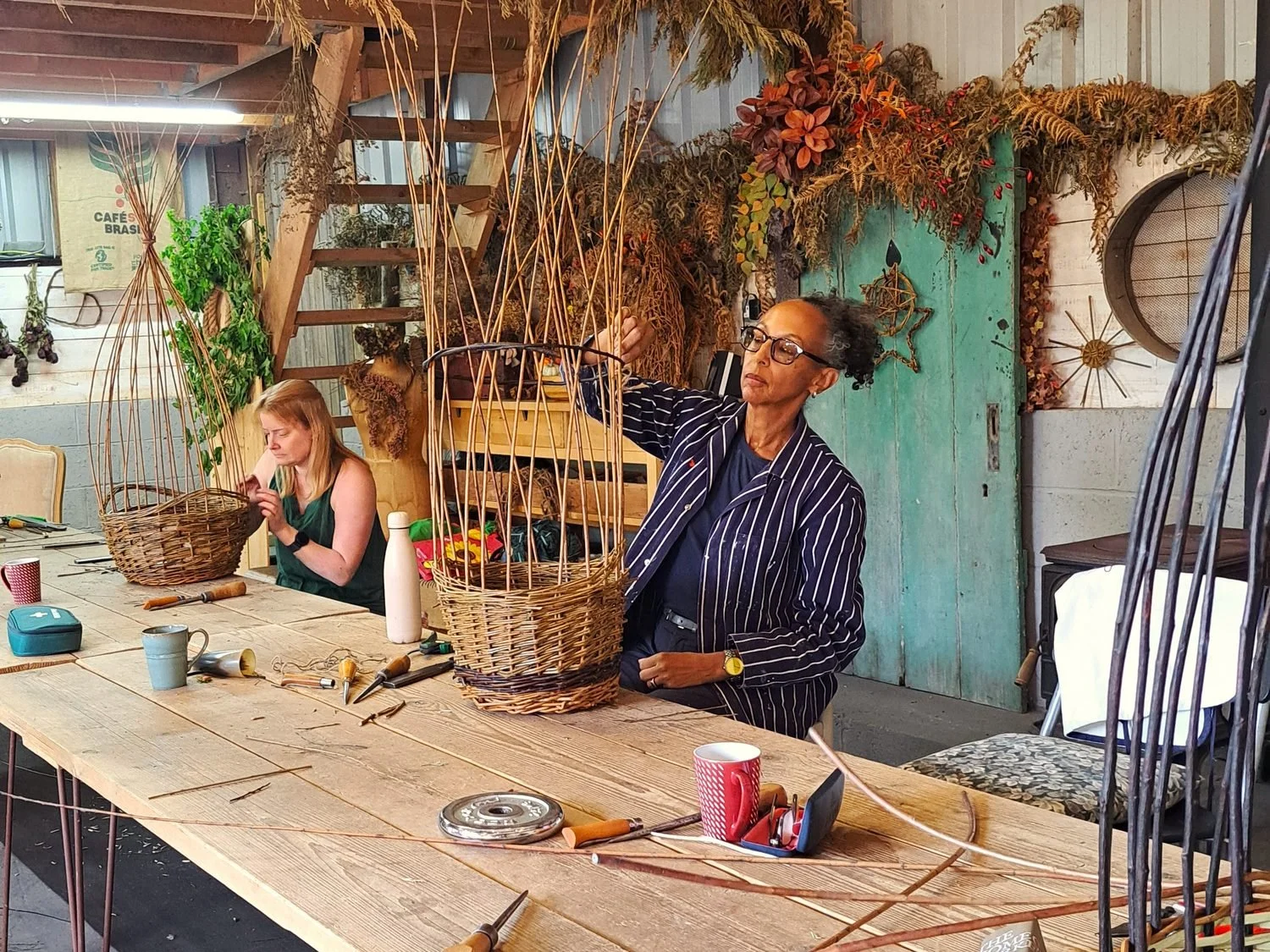
Everyone learns differently. I wasn't taught that way at school, so I fit my teaching to whoever is in front of me.
I show you how it's done and talk you through it. Then you have a go, while I give you feedback and encouragement, with a finished basket beside us as an example. There's a clear process, with easy steps to remember, because the less confusion there is, the more open you are to learning.
"She is so inspiring and always patient and encouraging."
Melinda, plant supports workshop, Tenterden.
Teachers, Exhibitions and Memberships
-
Learning From
Alan Sage
Benjamin Nauleau, Brittany: frame baskets
Hege Iren Aasdal, the vedmeis, at Tear Up Festival
-
Shown and Featured
Credits: Photography on this website are by Tim Allen, Jane Looker, Joanna Fletcher. Basket motifs by Judith Westrup.
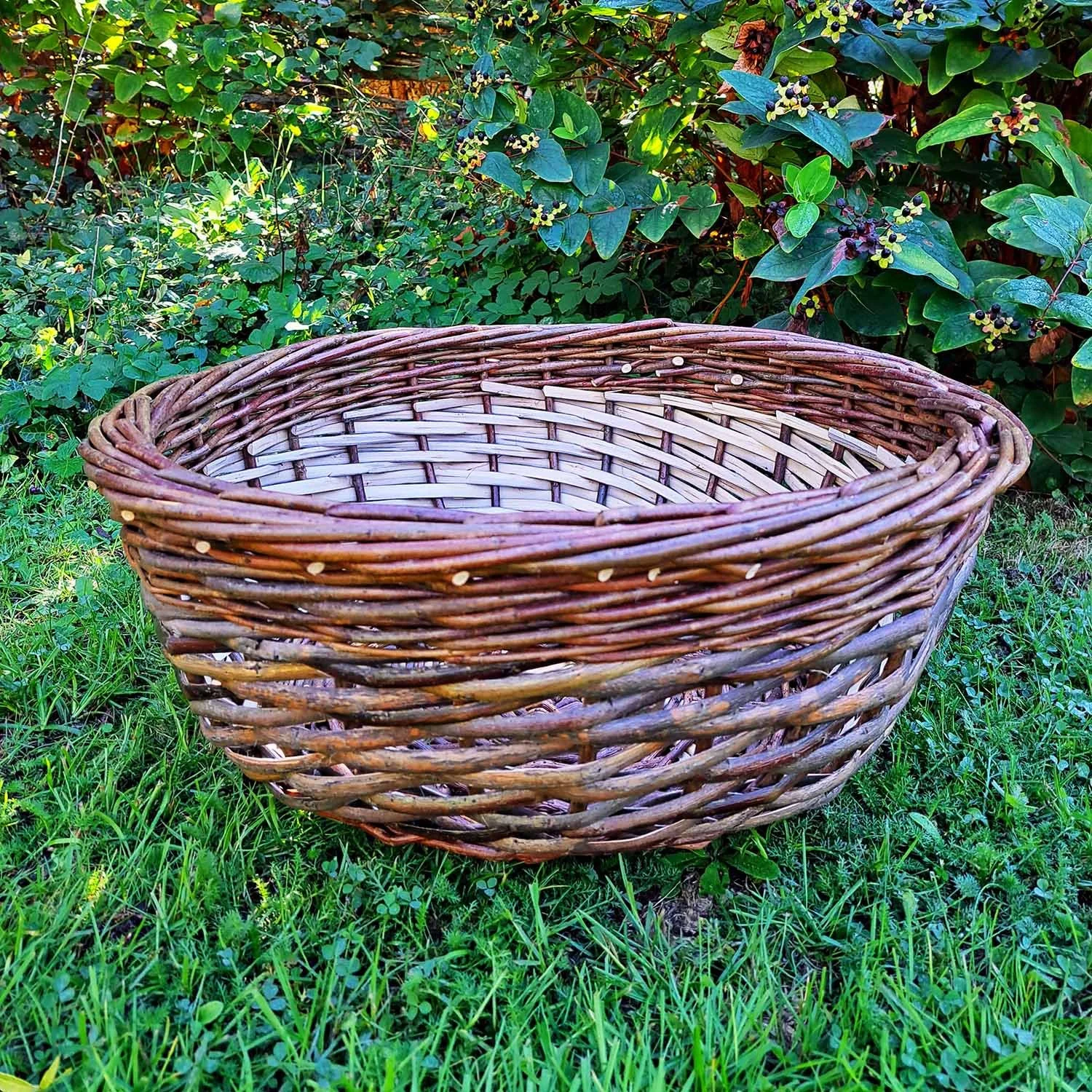
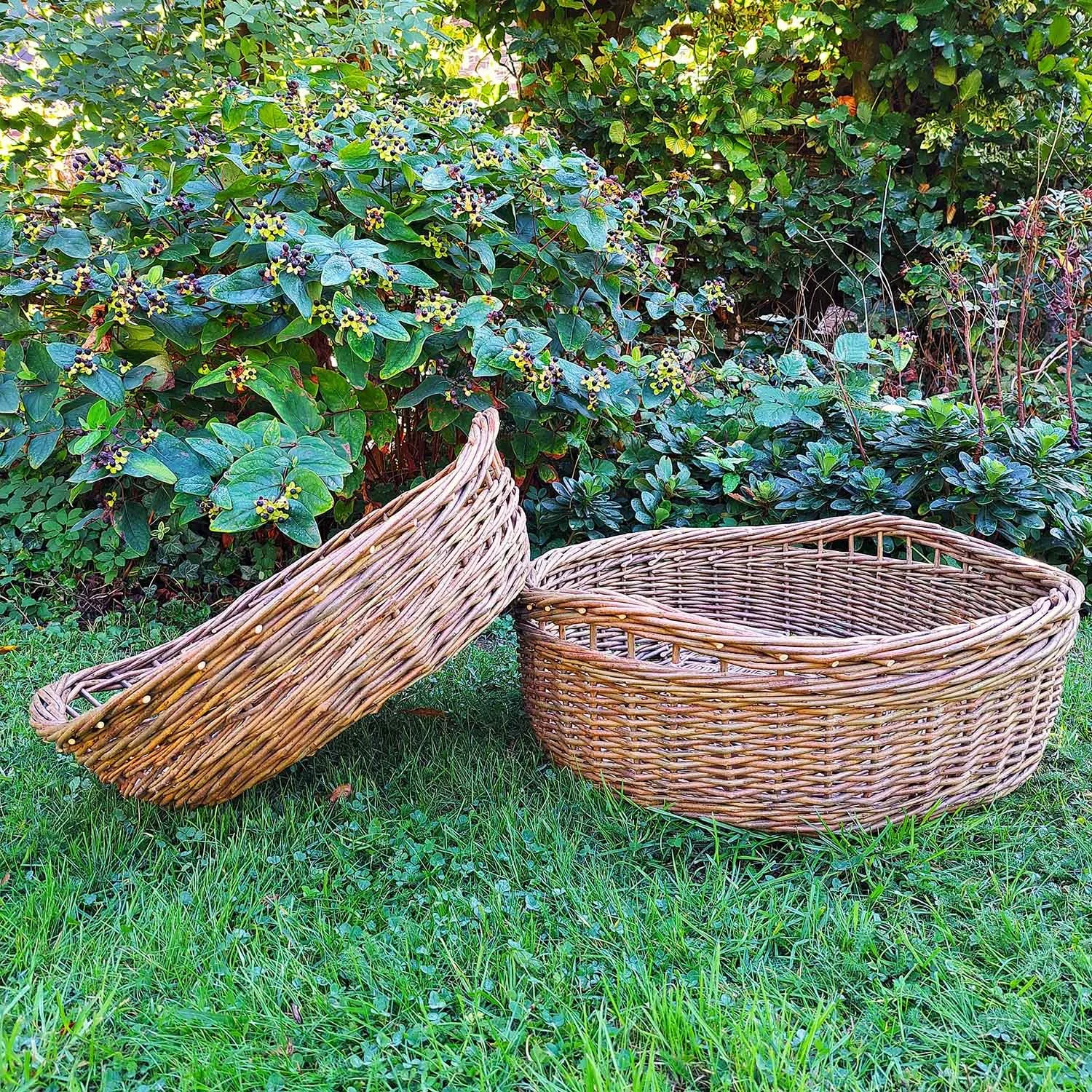
Available: 1 in stock.
Small frame basket, whereby the frame is made from hazel and the weavers are from skeined willow going from fine to slightly corser, with a pronounced God's Eye to tie the hoops. A traditional shape used for cockle picking in the olden days, but now used as handbag.
Size
Height 16cm (25cm at the handle), width 30cm, diameter 25cm
Hazel and Willow
Local, sustainably grown hazel framework, woven with skeined Brittany Green and Harrison willow.
Delivery
UK delivery is calculated at checkout.
Outside UK? Ask for a delivery quote.
Willow varies from year to year, so your basket’s colours may differ slightly from the photos and your screen.
Join my mailing list to hear about new baskets.
Please read my basket terms, shipping and returns before ordering.